Interesting Everyday Products With Practical Purposes
Instead of a ranked list of things to buy, here are six kinds of everyday product worth noticing, the practical jobs they do and the questions that keep curiosity honest.
By RRWWY4 min read
Every drawer has an object whose purpose you could explain in one breath, and another you could explain only with a demonstration. This piece is for the first kind: ordinary products with a clear job. It is a curated wander, not a league table. No product is named, nothing is ranked, and no price is quoted.
Each stop follows the same pattern: what the category does, then the one question that separates useful from merely cute.
Six categories, six jobs
1. Organisers that match the thing being organised
Cable ties, small pouches, drawer dividers. The category exists because loose things take time to find. The question: does it fit what you already own, or does it need a second purchase to make sense?
2. Containers that change shape or size
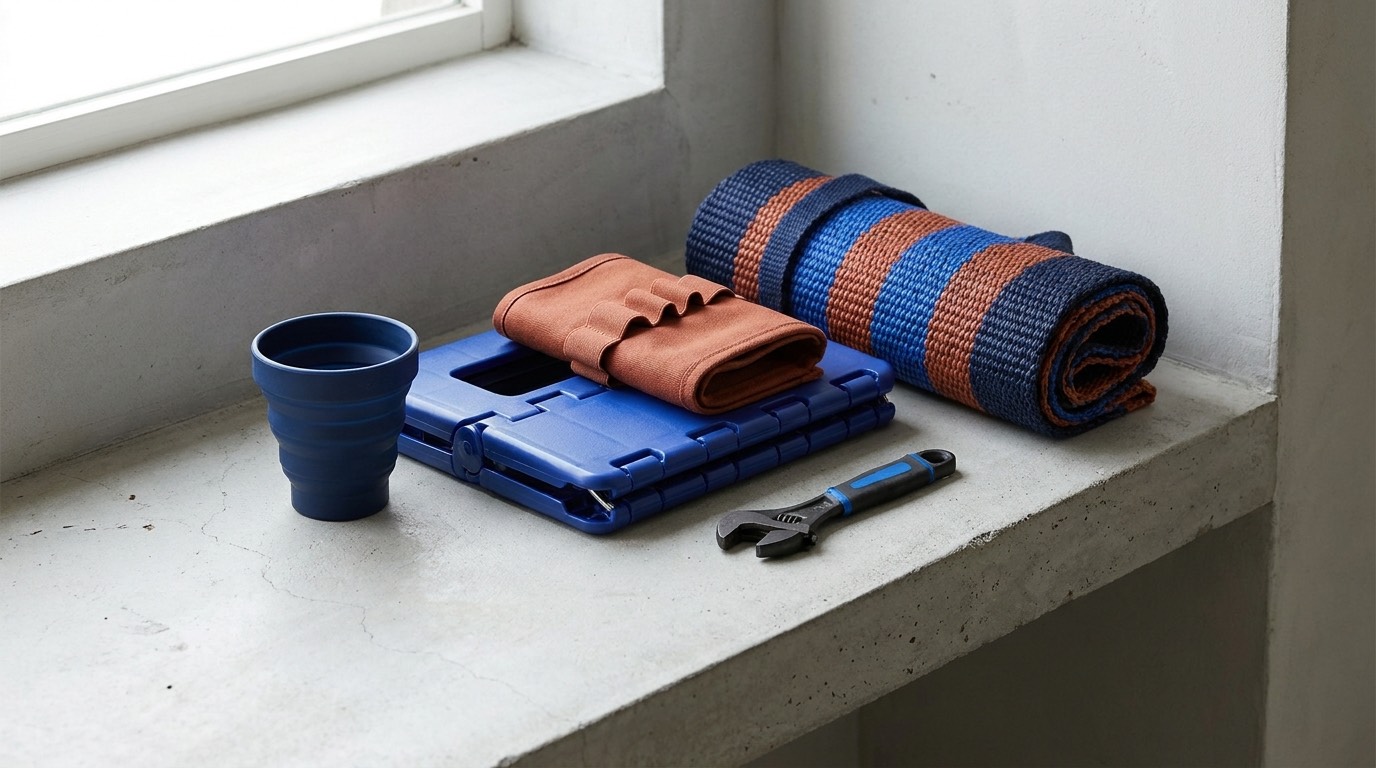
Collapsible, stackable or nesting items trade a little complexity for space. The question: how many steps to open and close it? If the answer is “several,” it may live permanently in the cupboard.
3. Grippy or guarded handles
Textured grips, pads and covers exist because slipping is annoying and sometimes risky. The question: is the grip on the part you actually hold? Ireland's universal design principles include low physical effort and tolerance for error, both easy to test by simply picking something up and imagining the hundredth use.
4. Lighting you can aim
Small, portable and clip-on lights solve a specific problem: light where you need it, not where the ceiling put it. The question: if it runs on a battery, how do you replace or recharge it, and what do you do with it at the end of its life?
5. Things that make small tasks less fiddly
Openers, holders and stands turn two-handed jobs into one-handed ones. The question: does it remove a real nuisance, or just move it somewhere new?
6. Items made for a different way of living
Products designed for different abilities, ages or body sizes often end up helping people well beyond their original audience. The Centre for Excellence in Universal Design describes this as design that is good for everyone, not a special requirement for a minority. The question: could many different people use it without help?
The step before you keep anything
Health Canada's consumer product safety pages cover recalls and safety alerts, incident reporting, and safety tips including second-hand products. A recall, according to its explainer on safety alerts, means a product is pulled from the market, usually by the manufacturer, and for consumer products it is always considered a danger to health or safety. Health Canada notes that consumers can browse a recalls and safety alerts web application or use its mobile app.
If you are given or buy something second-hand, a quick check is sensible. The Canada Consumer Product Safety Act brochure lists among its prohibitions supplying products that have been recalled for health or safety reasons, which is a good reminder that a recalled product should not be passed on.
A word on why categories beat products here. Products come and go, change specifications and disappear from shelves; the jobs they do stay put. If you understand the job, you can judge a new version of the object on sight, and you are less likely to buy something because it is shiny rather than because it solves anything.
There is also a pleasure in noticing. A hypothetical weekend spent looking at how your own home handles small frictions, where things pile up, which drawer jams, what you reach for with the wrong hand, tends to produce a better shortlist than any browsing session.
Read the claims with a pencil
Competition Bureau Canada states that it is prohibited to make materially false or misleading representations to promote a product, and that performance claims must be backed by an adequate and proper test. It also lists misleading warranty or guarantee claims and drip pricing, where mandatory fees stop an advertised price from being reachable, among the practices it treats as misleading. You do not need to litigate any of this. Just treat a claim as a sentence someone wrote, not a fact someone proved.
A tiny scoring sheet you should not use
It might be tempting to score the six categories out of ten. Resist. Usefulness is personal: a collapsible container is a lifesaver in a small apartment and clutter in a spacious one. A hypothetical example: two people look at the same clip-on light, one reading in bed and one fixing a bike chain. Same object, different verdicts, both correct.
Before an everyday product earns a place
I can say in one sentence what job it does.
It works with things I already own.
Using it for the tenth time is as easy as the first.
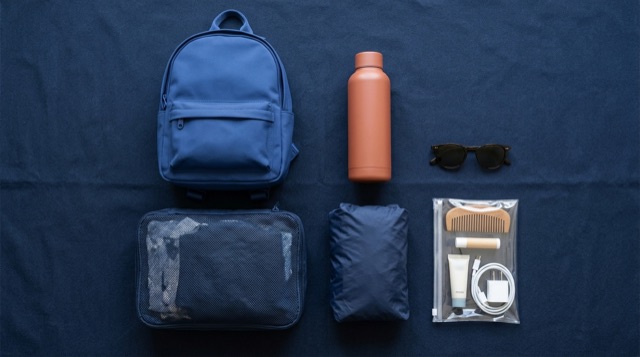
A bag, a bottle, a watch strap, a pair of glasses cord: accessories earn their keep by fitting how you actually move through a day. Here is a way to choose with your routine, not the product photo.
Every recommendation arrives with a motive, from a friend's enthusiasm to a paid placement. The Competition Bureau's guidance gives a practical way to tell which is which.
Newsletter
RRWWY Picks
A short email of new articles from RRWWY, sent by Move Ads Canada Inc.. Sign up with your email address and tick the consent box. No cadence is promised. How it works.