Time Off
Practical Gear for Short Trips and Weekend Activities
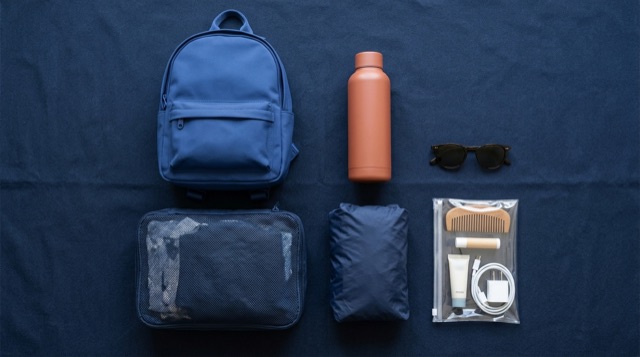
Short trips punish heavy bags. A look at what gear actually has to survive: airport screening, sun and a bag you carry yourself.

Everyday FindsBuying guide
A bag, a bottle, a watch strap, a pair of glasses cord: accessories earn their keep by fitting how you actually move through a day. Here is a way to choose with your routine, not the product photo.
By RRWWY4 min read
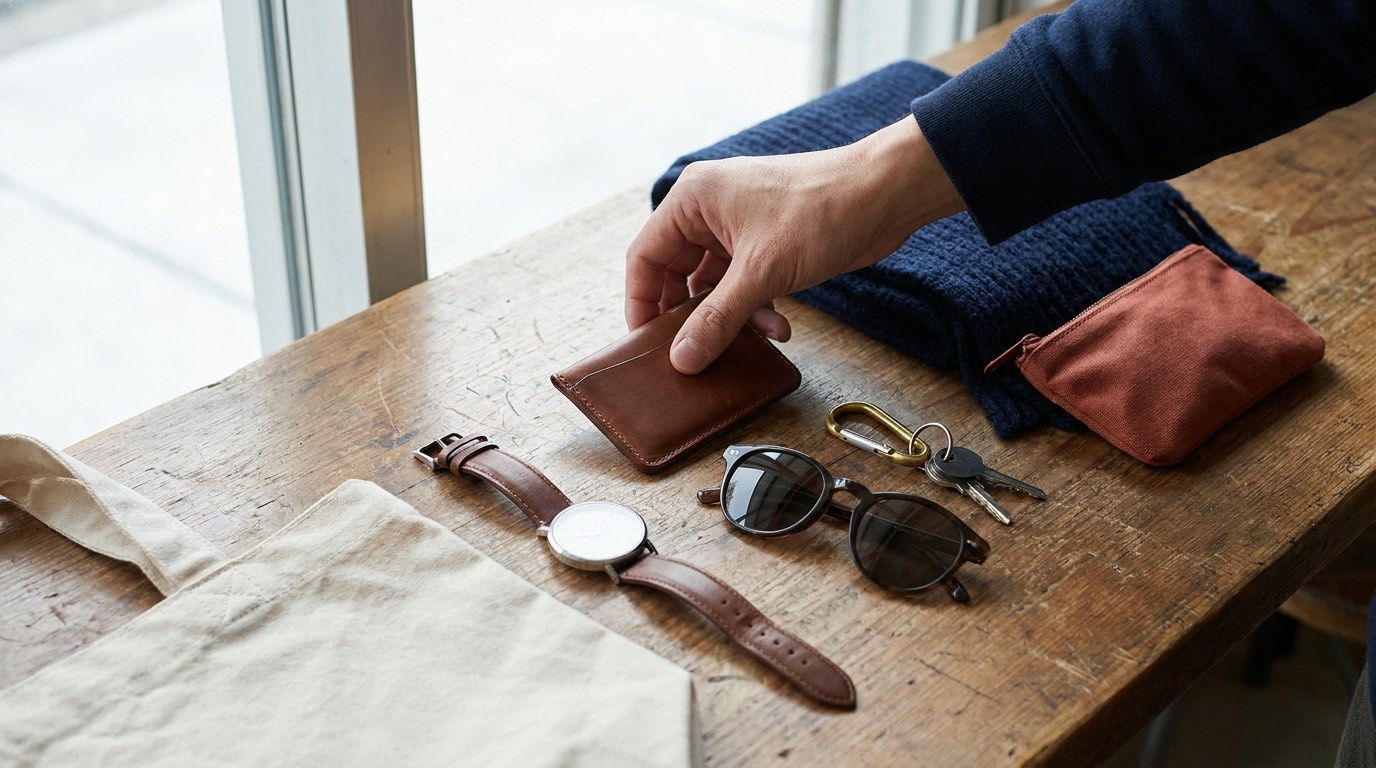
An accessory is a small decision you make hundreds of times. A bag strap that digs in is not a catastrophe on day one. By day ninety it is a daily irritation you have stopped noticing. That is the odd economics of accessories: low drama, high repetition.
This guide is a method rather than a shopping list. It names no brands, ranks nothing and quotes no prices. Everything about your own routine, you already know; the aim is to help you use it.
Take a hypothetical weekday: commute, desk, a coffee, an errand, an evening out. Write down each moment an accessory comes into play and what that moment demands. A bag gets lifted on and off a seat. A bottle gets dropped. A watch strap meets a desk edge. A pair of earbuds meets pockets and lint.
Now the product category has a context. You are no longer asking “which bag?” but “what must a bag survive on a Tuesday?”
| Quality | What to look at | Where claims need care |
|---|---|---|
| Comfort | Grip, strap width, weight against the body, edges | “Ergonomic” with no explanation of what it does |
| Durability | Stitching, joints, replaceable parts, materials | “Built to last” without any stated basis |
| Simplicity | Number of steps to open, adjust or clean | Features that add steps you will not use |
| Fit with the rest of your kit | Does it work with what you already carry | Accessories that require more accessories |
| Safety | Recall notices, labelling, instructions | Anything that sounds like a safety promise without detail |
The first row has an official reference point. CCOHS, in its hand tool design guidance, suggests handles of at least 100 mm that span the full breadth of the palm, non-slip and compressible materials, and avoiding glossy handles. That is written for workplace tools, but the logic carries over to anything you grip repeatedly. Its weight suggestions are 1.4 kg or less for one-handed tools, and the page says the centre of gravity should line up with the gripping hand so the tool feels easy to hold. A heavy, front-loaded object is tiring however nice it looks.
Competition Bureau Canada says that performance claims about effectiveness, performance or lifespan must be backed by an adequate and proper test, and that it is prohibited to make materially false or misleading representations to promote a product. Practically, that means you can ask of any durability claim: tested how? You may not get an answer on the product page, but the question sorts the specific from the decorative.
Health Canada explains that a recall means a product is pulled from the market, and that for consumer products a recalled product is always considered a danger to health or safety. Its recalls and safety alerts tools are free to search. Accessories that touch the body, are chargeable or are used by children deserve a search before use. Absence of a notice is not a safety certificate.
A hypothetical example: two people choose a bag. One cycles to work and needs it to stay put on the back; the other takes it on public transit and needs it to open fast with one hand. Same category, almost opposite priorities. The more precisely you describe the day, the fewer features you have to pay attention to, because most of them stop mattering.
It also helps to decide what you are willing to trade. Perhaps a plainer finish for easier cleaning, or a slightly heavier build for a repairable one. Writing down one trade before you shop keeps a good-looking detail from quietly rewriting your list.
Before buying, picture the day it fails. If a strap snaps, can a part be replaced? If it is a fashion piece, will you still wear it when the season turns? Nothing is forever, but some things fail gracefully and some fail all at once.
Fit is not only physical. Ireland's universal design principles include flexibility in use, simple and intuitive use, and low physical effort. A clasp that needs two steady hands is a design choice with consequences. The W3C Web Accessibility Initiative makes a parallel point for digital products: situational limits, such as a temporary injury, can affect anyone, which is a good argument for forgiving designs.
If you are building out the rest of your kit, Practical Gear for Short Trips and Weekend Activities covers the travelling side, and Everyday Finds has more in this vein.
Based on published information and the sources listed below. RRWWY has not tested the products or services mentioned.
Time Off
Short trips punish heavy bags. A look at what gear actually has to survive: airport screening, sun and a bag you carry yourself.
Everyday Finds
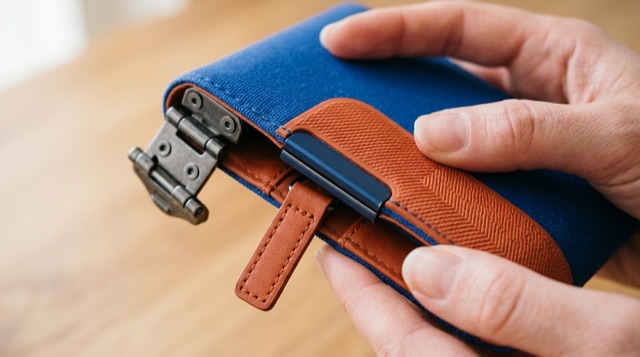
Ease of use usually hides in small things: a clear click, a forgiving shape, a label you can read at a glance. Here is where to look, and why accessibility guidance applies well beyond screens.

Culture & Discoveries
Every recommendation arrives with a motive, from a friend's enthusiasm to a paid placement. The Competition Bureau's guidance gives a practical way to tell which is which.
Newsletter
A short email of new articles from RRWWY, sent by Move Ads Canada Inc.. Sign up with your email address and tick the consent box. No cadence is promised. How it works.