Practical Gear for Short Trips and Weekend Activities
Short trips punish heavy bags. A look at what gear actually has to survive: airport screening, sun and a bag you carry yourself.
By RRWWY4 min read
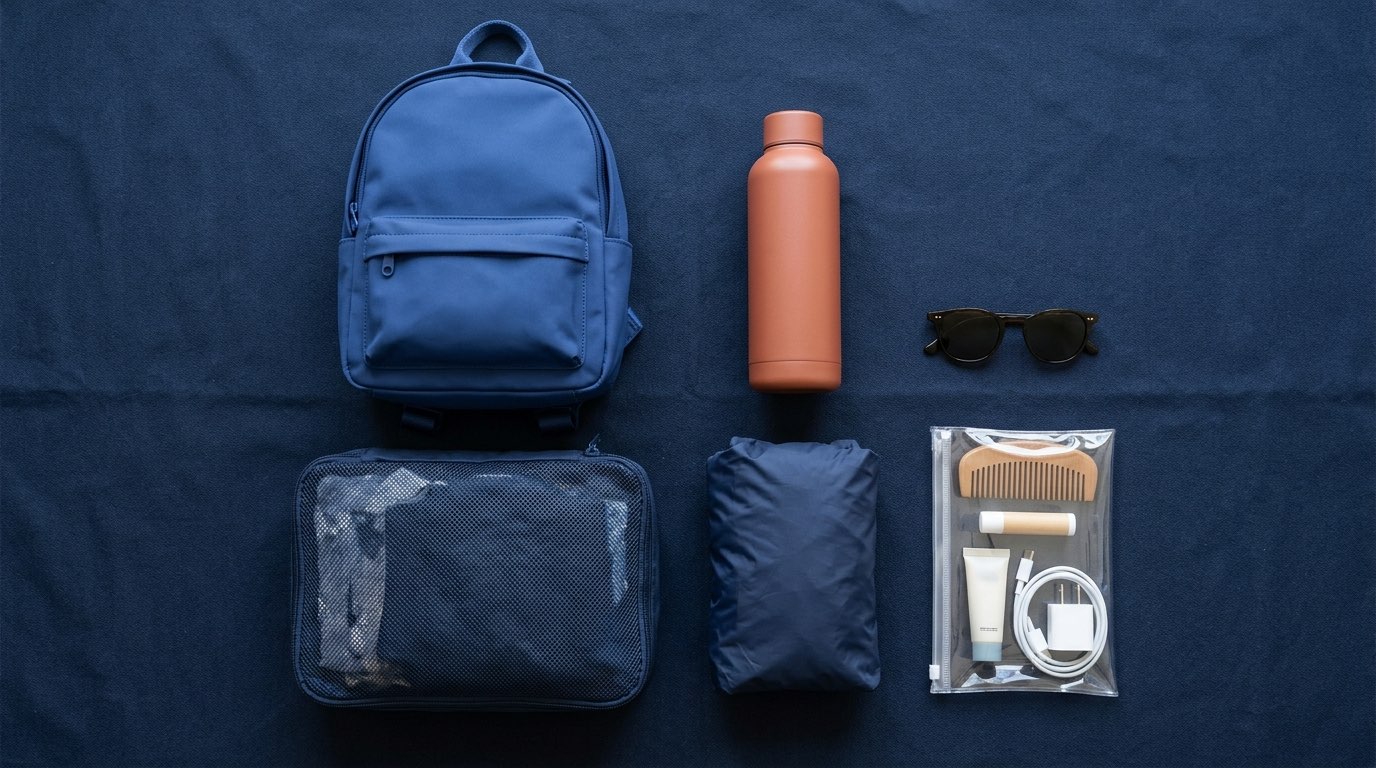
Start with the bag, not the shop. Imagine a weekend away with a single carry-on and a plan to walk everywhere. The gear that matters is whatever makes that bag lighter, faster through screening and kinder to you in the sun. Everything else is optional, however good the packaging looks.
This is an illustrative scenario, and this guide names categories, not products. We have not tested any gear mentioned.
Gear that has to pass screening
CATSA, the authority that screens passengers at Canadian airports, sets one rule that catches many travellers: liquids, aerosols and gels in carry-on must be in containers of 100 ml (100 g) or less, all fitting in one transparent, closed, resealable bag of no more than 1 L. CATSA's own tip is blunt: if the bag will not close, it is too full, and it should sit near the top of your carry-on. Powders and granular materials such as baby powder or foot powder are limited to 350 ml in total. Gifts and souvenirs such as liquor, perfume, lotion and maple syrup belong in checked baggage or should be shipped separately.
For a short trip, that favours small refillable bottles and solid alternatives. Laptops and cameras should be easy to pull out, and CATSA's guidance says some lanes with CT X-ray let you leave electronics in the bag while standard lanes need a bin.
Where common short-trip items sit under CATSA and Transport Canada guidance
Item type
Carry-on or checked?
Thing to know
Toiletries in small bottles
Carry-on, in the 1 L bag
Each container 100 ml or less
Full-size liquids
Checked bag
Permitted there; not in the cabin
Spare power bank
Carry-on only
Transport Canada says spares must stay in the cabin, even if the bag is gate-checked
Prescription medication
Carry-on
Exempt from the 100 ml limit; declare it and keep it accessible
Laptop or camera
Carry-on
Make it easy to remove; lane type varies
A practical way to think about it: pack in layers of access. The things security may want to see sit at the top, the things you need on the plane sit in the middle, and the things you will not touch until the hotel go at the bottom. CATSA's tips add that slip-on shoes, minimal jewellery and moving phones, wallets and keys into your bag before the checkpoint can cut delays, and that an organised carry-on helps officers see what is inside, which can avoid extra checks.
The battery question
Power banks are the one piece of gear with a safety alert attached. Transport Canada's Civil Aviation Safety Alert 2025-10 says spare, uninstalled lithium batteries, including power banks, must be in carry-on baggage, and if the bag is checked at the gate they have to be taken out and stay with you in the cabin. It also says terminals must be protected against short circuits. For recalled, damaged or defective units, the alert says to power them off, avoid using or charging them, and keep them on your person for the whole flight, not in a bag.
Gear for the sun, not just the airport
Many weekend activities happen outdoors. Health Canada says to protect your skin when the UV index is 3 or higher, even on cloudy days, with a wide-brimmed hat of breathable fabric, light long sleeves, sunglasses that block UVA and UVB, and sunscreen labelled broad spectrum and water resistant with an SPF of at least 30. Check the forecast first: Environment Canada lists it in the seven-day forecast. Reapply sunscreen every two hours or after swimming or heavy sweating when the index is very high.
Medication and the small essentials
CATSA's medication guidance says prescription and essential non-prescription liquids, gels and aerosols can exceed 100 ml and need not go in the 1 L bag; keep them in original labelled containers and be ready to show them. Battery-powered coolers go in checked luggage, while gel packs and non-electric insulated containers should be declared. Anyone with specific medical needs should read the page itself and contact CATSA, which asks for at least 48 hours' notice for specialised situations.
A short checklist before buying anything
Does this earn its place in the bag?
Which problem on my last trip would it have solved?
Does it fit inside what I already carry?
If it holds a battery, can I carry it in the cabin and is it free of recalls?
Does it contain liquids that need to be 100 ml or less?
Is there a library or friend I could borrow it from first?
Short-trip gear is worth a second look because the constraints are physical. You carry it, you screen it and you live with it for two days. A product that shaves a few hundred grams or removes one step at the checkpoint does something useful; one that merely adds another zipped pocket may not. When you read packaging, look for plain facts such as capacity, dimensions and the maker's stated terms, and ignore adjectives. As ever, check current terms for returns and warranties on anything you buy.
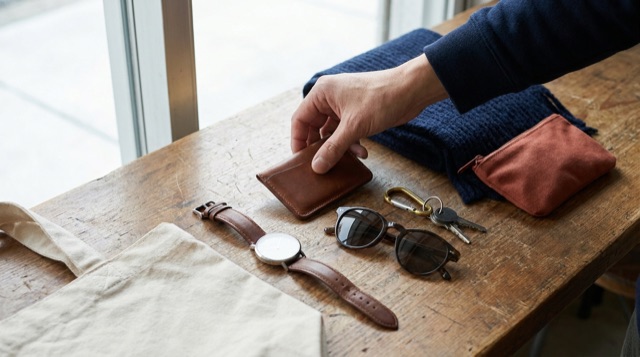
A bag, a bottle, a watch strap, a pair of glasses cord: accessories earn their keep by fitting how you actually move through a day. Here is a way to choose with your routine, not the product photo.
A weekend rarely feels different because of a big plan. It tends to feel different because one small thing changed: a route, a sound, an hour. Here is how to run a few low-effort experiments.
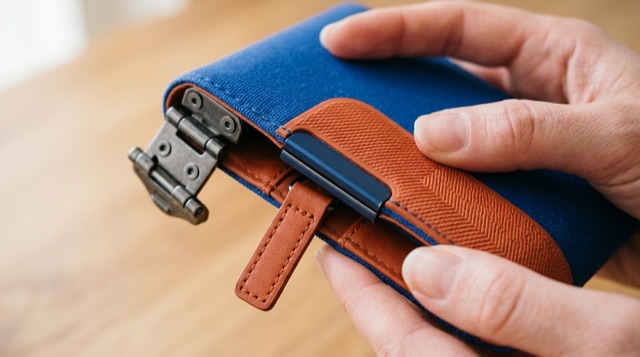
Ease of use usually hides in small things: a clear click, a forgiving shape, a label you can read at a glance. Here is where to look, and why accessibility guidance applies well beyond screens.
Newsletter
RRWWY Picks
A short email of new articles from RRWWY, sent by Move Ads Canada Inc.. Sign up with your email address and tick the consent box. No cadence is promised. How it works.