
Time Off
Small Discoveries That Make Staying In More Enjoyable
Staying in works best when it has a little shape. A few ideas across reading, listening, watching and making, sorted by how much effort each asks for.

Screen & SoundPractical guide
Comfort, sound, a pick everyone can live with and an end time that respects tomorrow. A practical run-through, with hearing and sleep guidance from Canadian health sources.
By RRWWY4 min read
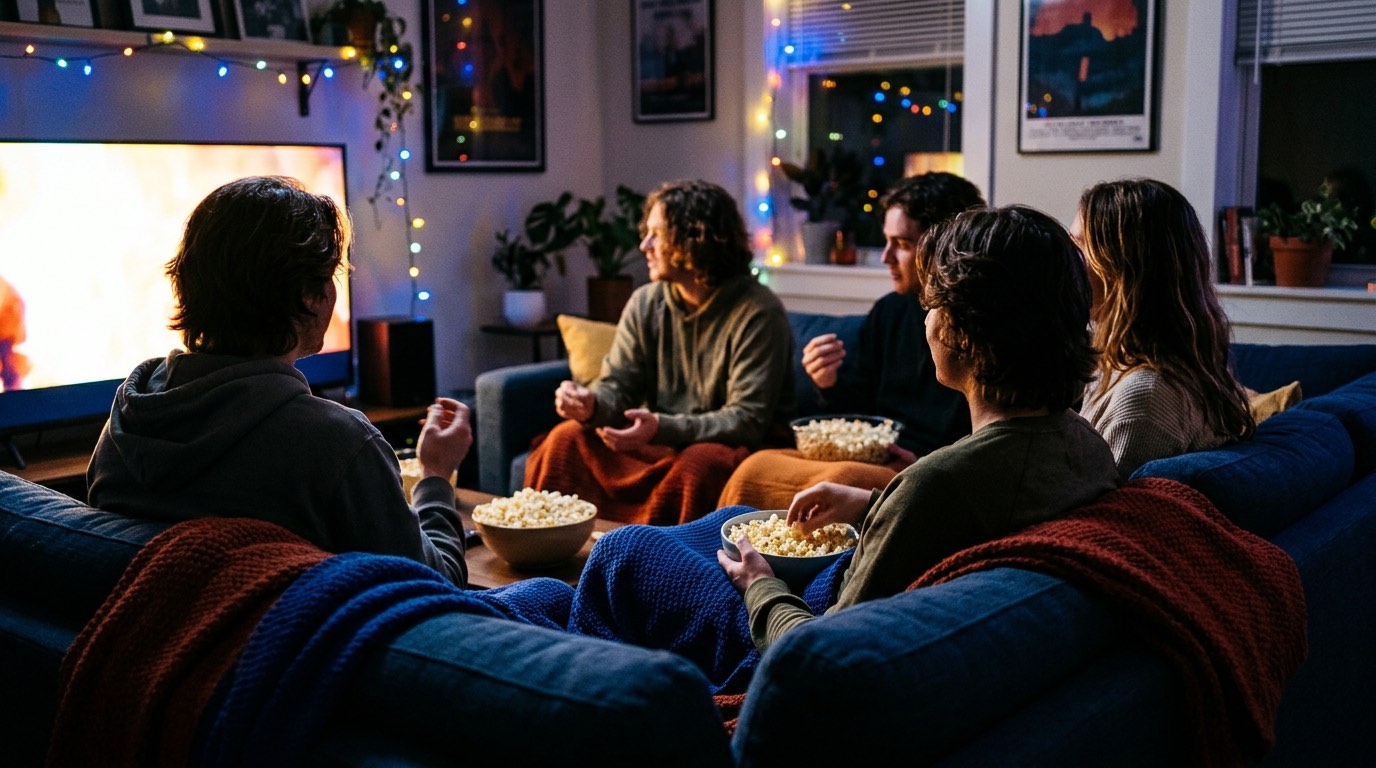
The best movie nights are rarely about the film. They are about the dull logistics that made the room feel good: where people sat, whether the dialogue was audible, who was allowed to veto, and when it ended. The film just gets the credit. Here is how to do the logistics on purpose.
Each person puts forward one or two options, then you vote or flip a coin. An hour of scrolling together is the quickest way to kill the mood. If you are stuck, Why Discovering Something New to Watch Can Be So Difficult explains why the endless rows make it harder.
Seating that nobody has to perch on, lights low enough to see the screen but not so dark that people trip on the way to the kitchen, and a blanket within reach. Put chargers and remotes where they will be found, not hunted for.
Most evenings go wrong on dialogue and loud scenes: voices you cannot catch, then an explosion that wakes the neighbours. Test a quiet scene and a loud one before you start, and settle the volume so speech is clear without the loud parts being punishing.
Turn them on if anyone in the room wants them, or if dialogue is quiet or accented. They are a feature, not an admission.
Pick a stop point before you press play, and be honest about whether a second film is a good idea.
Home cinema invites louder listening than usual, and Health Canada's guidance is worth knowing. On its hearing-health page, headphones are described as too loud if the device volume is above 60% of maximum, and it suggests using a built-in feature or app to cap volume or show warnings. The same page encourages turning the volume down even a little and reducing background noise so you do not need to turn it up.
Treat the numbers as general guidance, not a personal measurement. They come from a government page for the public, not from a test of your living room, and a quiet-but-clear mix at a lower level is nearly always achievable by sitting closer, reducing background noise or using captions.
Its hearing-loss page offers a table of sound levels and the time before risk begins. In that table, headphones at high volume sit at about 100 dB, with a risk after 15 minutes; a busy city street corner is about 85 dBA, where eight hours a day can pose a significant risk. Speakers in a room are not headphones, but the logic is the same: loud for long is the problem. The page also lists warning signs, including needing to raise the TV volume more than before and finding it hard to follow conversation in noisy places. If those sound familiar, it recommends seeing a healthcare professional.
Access features are not just for one person in the room. Captions help when dialogue is murmured or the dishwasher is running. Described video, which narrates important visual details, matters to people who are blind or partially sighted. In December 2025 the CRTC announced that described video will be available on new original scripted shows on television and online, including streaming, with changes phased in over two years, and audio description for news and information programs. The release did not specify which services or exact dates, so check what the service you use actually offers.
Even without special features, small habits help: dialogue is easier to follow when the room is quiet, so switch off the extractor fan and put phones on silent. If someone in the household finds speech hard to follow in noisy places, that is one of the signs Health Canada lists as worth raising with a healthcare professional.
The Canadian Paediatric Society's Caring for Kids guidance for children and teens advises avoiding screens for at least an hour before bedtime and keeping recreational screens out of bedrooms, and suggests watching together and talking about the content when possible. It is written for families, but an end time that leaves a wind-down gap is a sensible habit for most households.
Snacks deserve a sentence. Anything that needs two hands and a napkin is best eaten before the film or paused for. A shared bowl placed in the middle of the sofa tends to be more sociable than individual portions, and it avoids the rustle of one wrapper during the one quiet scene.
Looking for ways to make evenings in feel like an event? Small Discoveries That Make Staying In More Enjoyable has smaller ideas, and Finding Audio Entertainment That Fits Your Routine covers what to listen to when the screen is off.
Based on published information and the sources listed below. RRWWY has not tested the products or services mentioned.
Time Off
Staying in works best when it has a little shape. A few ideas across reading, listening, watching and making, sorted by how much effort each asks for.

Time Off
A weekend rarely feels different because of a big plan. It tends to feel different because one small thing changed: a route, a sound, an hour. Here is how to run a few low-effort experiments.

Screen & Sound
Podcasts, audiobooks, music and radio fit different pockets of the day. Instead of choosing a favourite format, match the format to what your hands, eyes and attention are doing.
Newsletter
A short email of new articles from RRWWY, sent by Move Ads Canada Inc.. Sign up with your email address and tick the consent box. No cadence is promised. How it works.