
Time Off
Small Discoveries That Make Staying In More Enjoyable
Staying in works best when it has a little shape. A few ideas across reading, listening, watching and making, sorted by how much effort each asks for.

Time OffPractical guide
Most new hobbies stall before they start, usually at the shopping stage. Here is a five-step way to find out whether one is worth keeping.
By RRWWY4 min read
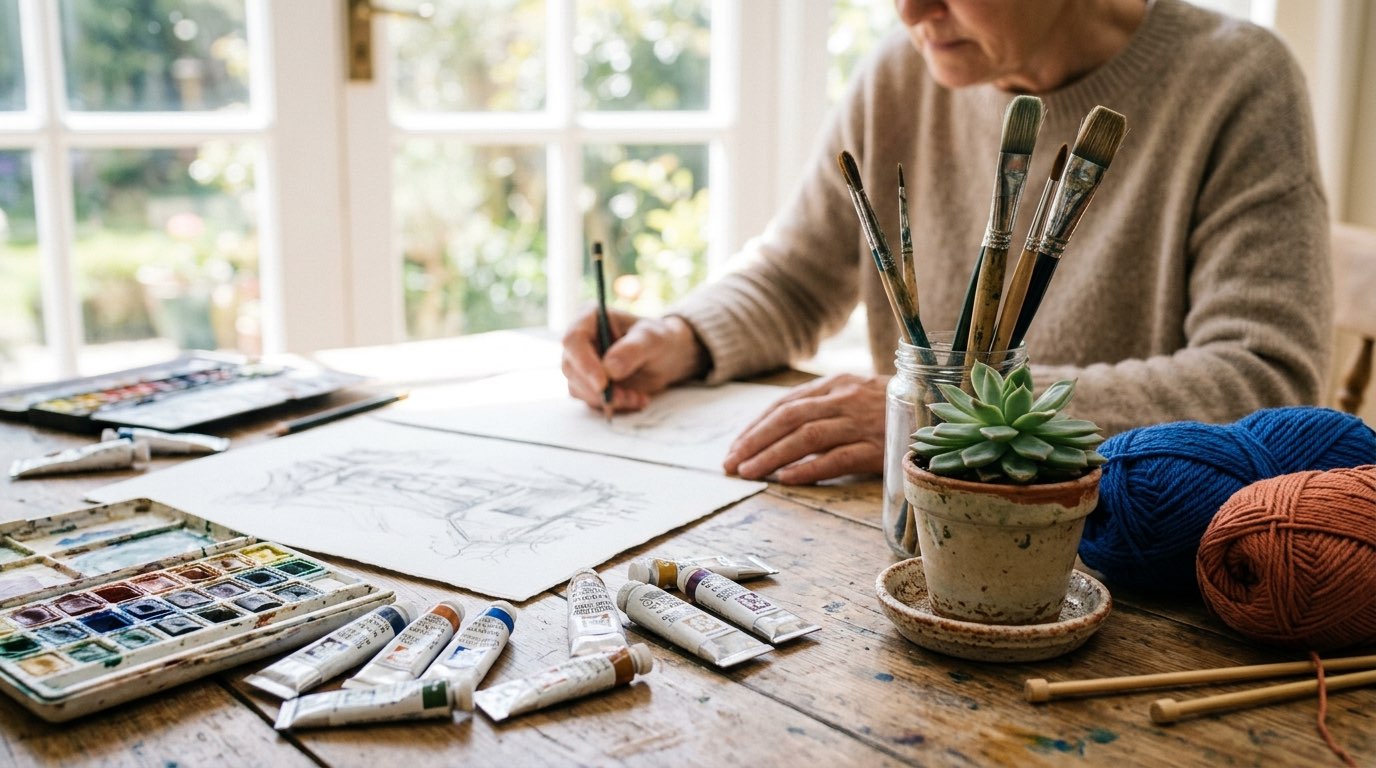
Somewhere in a closet there is a box that began as a promise. Watercolours, a starter ukulele, a bread-proofing basket. The excitement was real; the habit never arrived. The order of operations was wrong: equipment first, interest second.
Hobbies also carry social expectations that nobody warns you about: the right outfit, the correct jargon, the assumption that you will be good soon. Setting the trial up as an experiment lowers those stakes. You are not committing to an identity, only collecting information about your own tastes, and that information is yours whether or not the hobby survives.
Flip it, and a hobby becomes a cheap experiment. This is an illustrative framework, not a rule, and it works for most hands-on interests.
A few ground rules keep the experiment honest. Spend nothing before the trial ends unless you must. Keep notes, even a line or two, on what you enjoyed. Tell one friend what you are trying, so there is someone to compare notes with. None of this requires expertise, only a willingness to be a beginner on purpose for a short while.
Write one sentence about what attracts you. "Making something with my hands" calls for different tools than "learning a song" or "getting outside on Sundays." Vague interest buys vague gear.
Library apps can supply magazines and audiobooks on your topic. Calgary Public Library describes Libby as covering digital books, audiobooks and magazines, and Kitchener Public Library's virtual library lists the same plus movies, TV shows and music through hoopla. Offerings and limits vary, so confirm on your own library's page.
A Read Alberta feature on libraries of things lists items lent by Alberta libraries: musical instruments, small kitchen appliances, snowshoes, power tools and a radon testing kit among them. It stresses that holds and who may borrow differ by library. In Toronto, NOW Toronto reported in 2026 that instruments could be borrowed for 21 days with two renewals at three branches, plus audio recording kits for adults. Always check the current branch page.
Pick a short window, such as three sessions over two weeks, and a finish line: one finished sketch, one song's chorus, one recipe. A trial with a finish line tells you more than months of intention.
When the window closes, answer one question: do I want to do this again next week? If yes, you now know which tools actually mattered. If no, you returned a borrowed item and spent nothing.
The pull toward a full kit is strong. A better question is what the activity cannot start without. Often it is one item. The rest can wait until you know your preferences. Borrowed instruments are a fair example: you find out whether your fingers like the strings before you spend on your own.
A useful exercise: list what you think you need, then cross out anything that is about comfort, appearance or looking the part. What remains is usually short. A beginner sketcher needs something to draw with and on. A beginner walker needs shoes that do not hurt. A beginner baker needs a reliable oven and a recipe. The rest is enthusiasm in packaging.
Many do not, and those that do vary widely. Digital resources are more widely offered, so start with magazines and audiobooks, and ask staff whether anything else is on offer or planned.
Libraries and community programmes are designed for people starting out, and many list beginner-friendly sessions. Check the programme listings of your local library or recreation centre for what exists near you.
There is no official number. Choose a short window that you can realistically keep, and decide in advance what counts as success.
Not every experiment ends in a new passion, and that is a perfectly good result. You have reduced the cost of finding out, and you may have discovered something adjacent that fits better. Someone who borrows an instrument and decides music is not for them might find they enjoyed the library sessions, the community, or the quiet hour of practice, and that points to a different kind of hobby. Write down what you liked and disliked about the trial, and keep the note. It will shape your next experiment far more reliably than a purchase would.
Looking for hobbies that suit a quiet night? Try Small Discoveries That Make Staying In More Enjoyable, or browse Time Off.
Based on published information and the sources listed below. RRWWY has not tested the products or services mentioned.
Time Off
Staying in works best when it has a little shape. A few ideas across reading, listening, watching and making, sorted by how much effort each asks for.

Culture & Discoveries
Routines are efficient, which is exactly why they quietly narrow the map. A short, low-stakes detour can redraw it, and Canada has a few handy places to practise.
Digital Life
A kitchen renovation, a family reunion, a half-written novel: personal projects sprawl. Four kinds of digital tool can tame them, each with its own way of going wrong.
Newsletter
A short email of new articles from RRWWY, sent by Move Ads Canada Inc.. Sign up with your email address and tick the consent box. No cadence is promised. How it works.